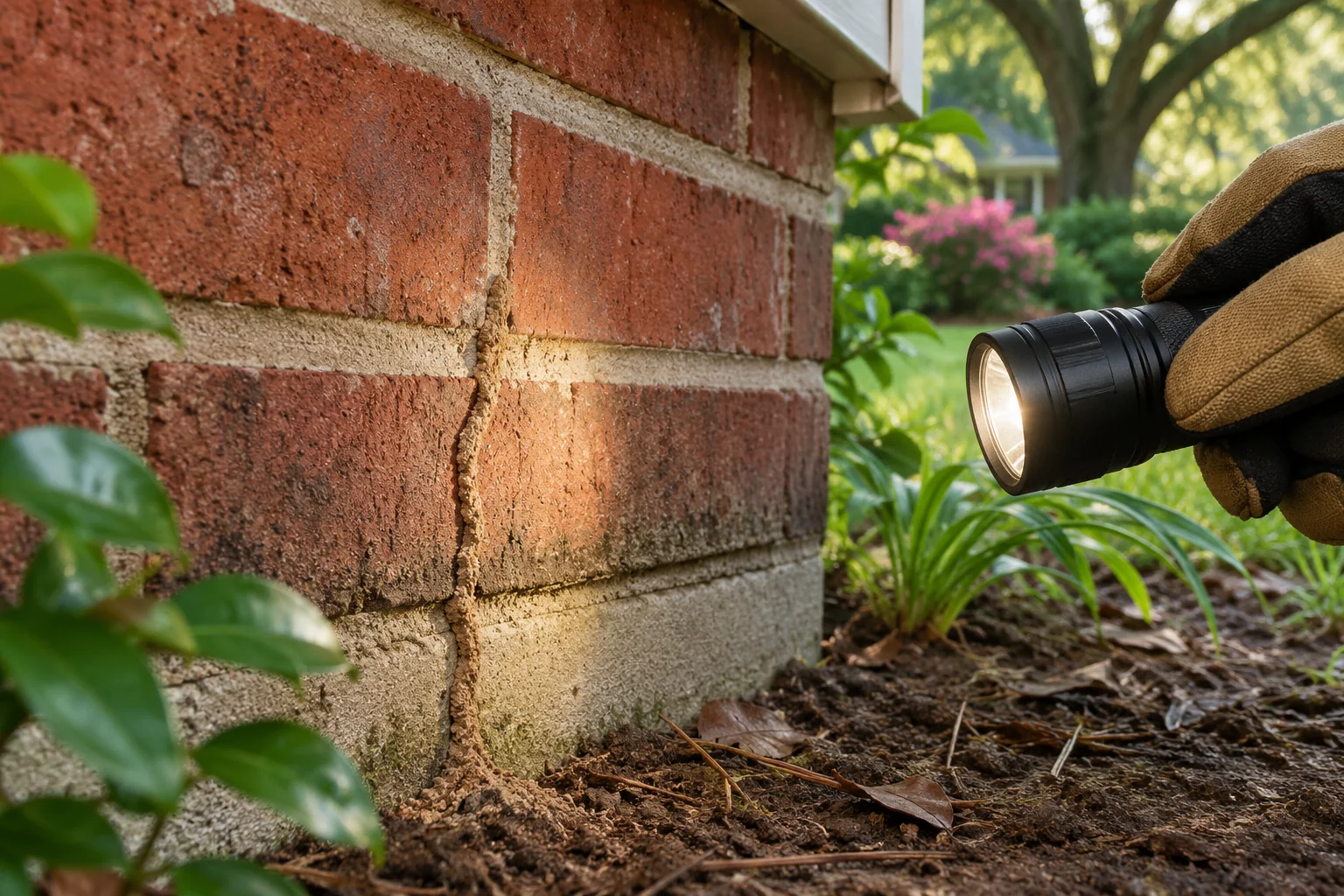
Liquid termiticides are used to treat appropriate soil or structural access points according to the product label. The purpose is to interrupt termite access or expose termites to the selected treatment. This differs from spraying visible insects indoors. Ask which product is proposed and why the application plan fits the identified problem.
Brick veneer, slab edges, crawl-space supports, attached porches and paved paths can affect access around a Birmingham building. Some proposals involve trenching or drilling; others have different access requirements. Tell the provider about wells, drainage systems, buried utilities, pets and sensitive areas before work is scoped. Product-label directions govern the actual application.
Ask how inaccessible areas are documented, what reinstatement is included and whether future excavation could disturb a treated zone. A written treatment record is useful when landscaping, utility repair or an extension changes the perimeter. Compare follow-up and contract coverage separately from the one-time treatment.
Compare slab foundation termite treatment and termite retreatment when planning the next step. Call (323) 689-7617 with your property address to confirm the requested service and current availability.
How it works
- 1
Describe the property and signs
Give the full address, observed evidence and any previous termite or pest records.
- 2
Confirm the assessment
Check the requested service, charge, access and availability for the property.
- 3
Review the written scope
Compare findings, treatment choices, exclusions, follow-up and contract terms.
Pricing
Ask about inspection charges, the written treatment scope, follow-up and ongoing service costs before booking. A property-specific quote is needed.